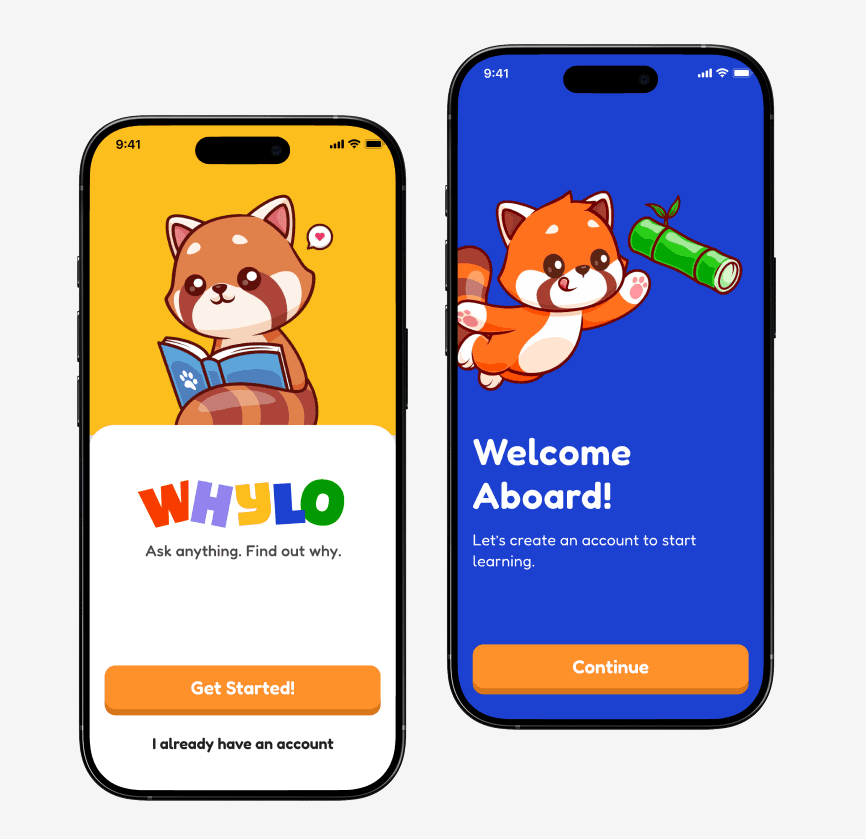
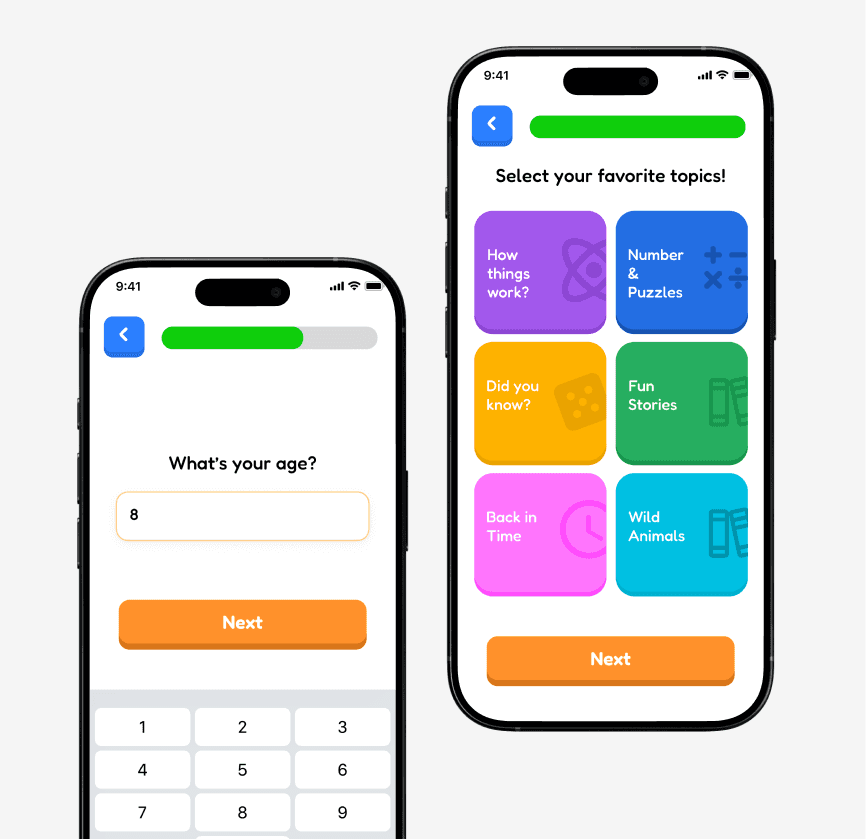
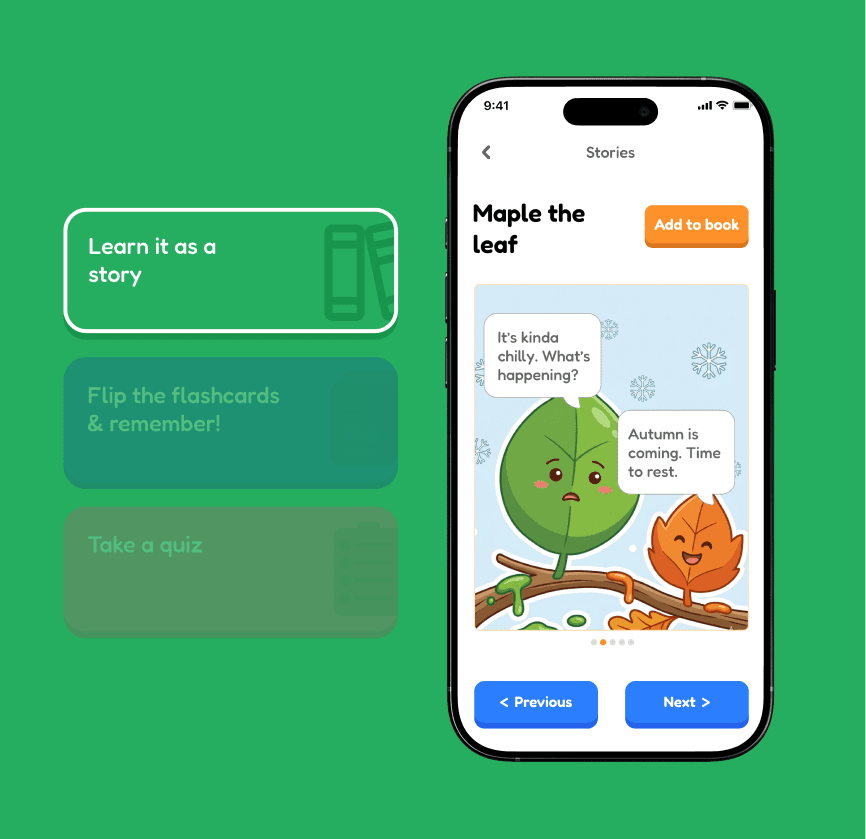
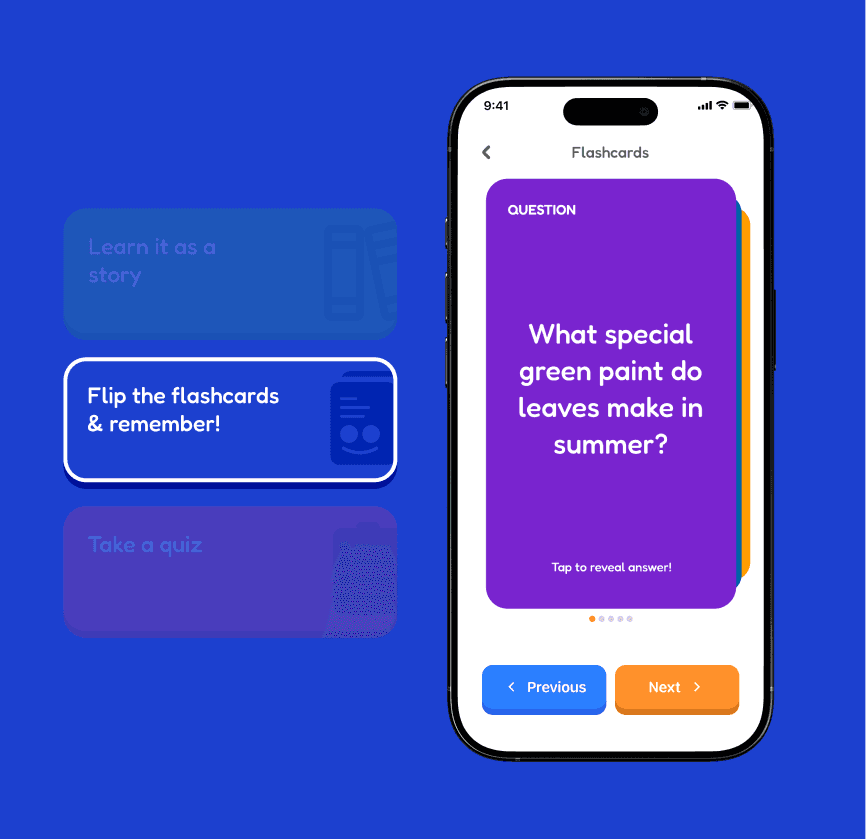
Giving kids an AI-powered learning app that follows their 'why' all the way to discovery

ROLE

Product Designer

TIMELINE

4 months

TEAM

3 Designers

SKILLS

Product Design

UX Research

Prototyping

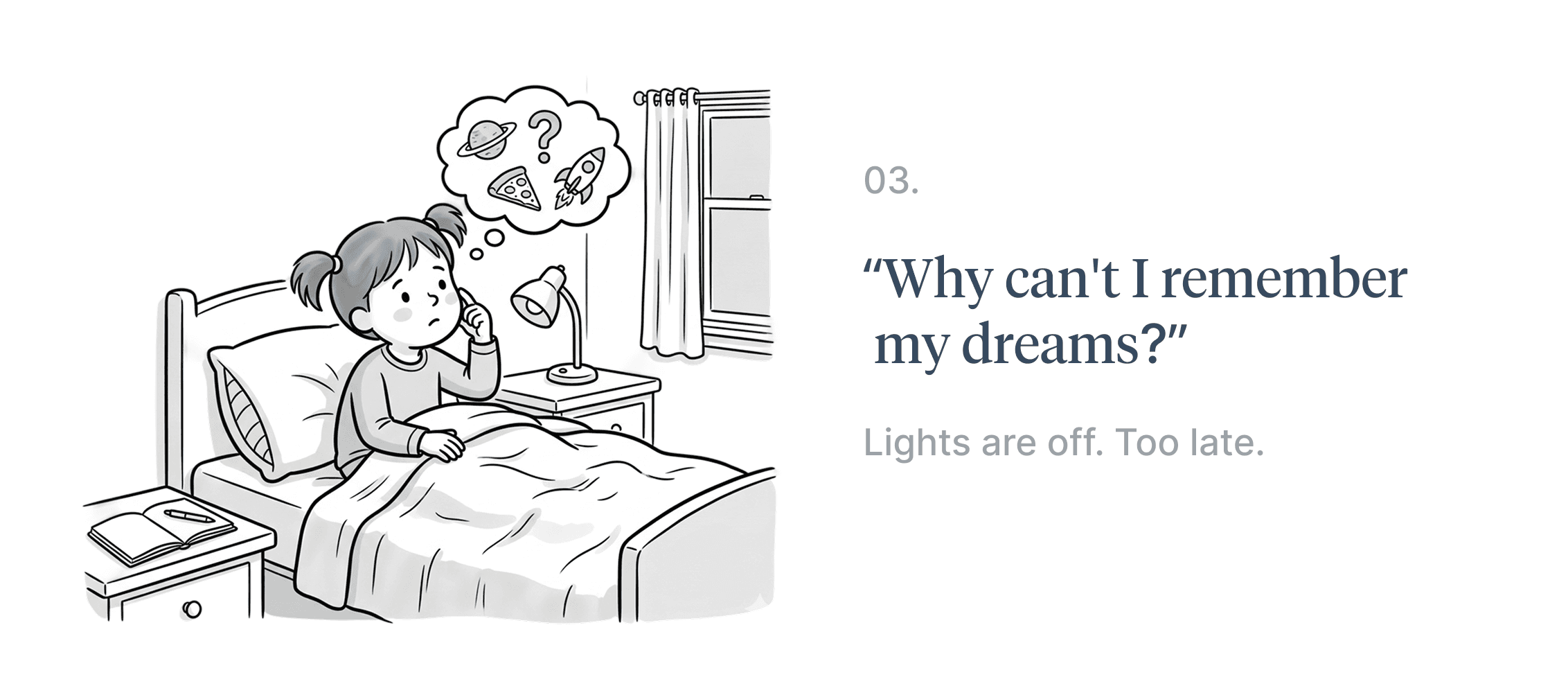
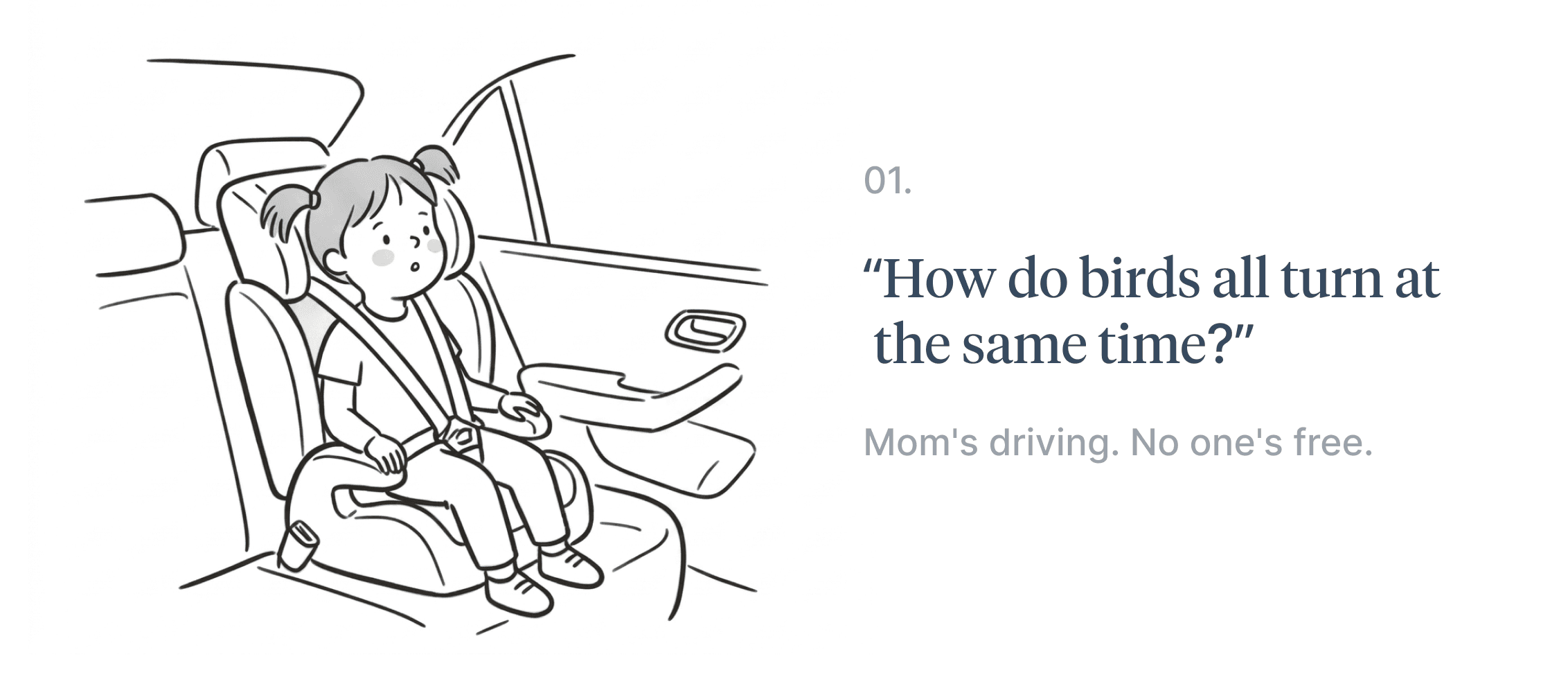
YOU'RE 8. BACKSEAT. MOM'S ON A CALL.

You see a flock of birds all turn at once. You wonder why.
Then the radio comes on. Gone.

Nobody failed you. The moment just moved faster than the question.

THE PROBLEM

Kids ask constantly. But not every question finds an answer.

Parents answer a lot of them. Teachers cover some. Google handles a few more. But the ones that arrive when no one's free, when the moment's already passed, those just don't make it.
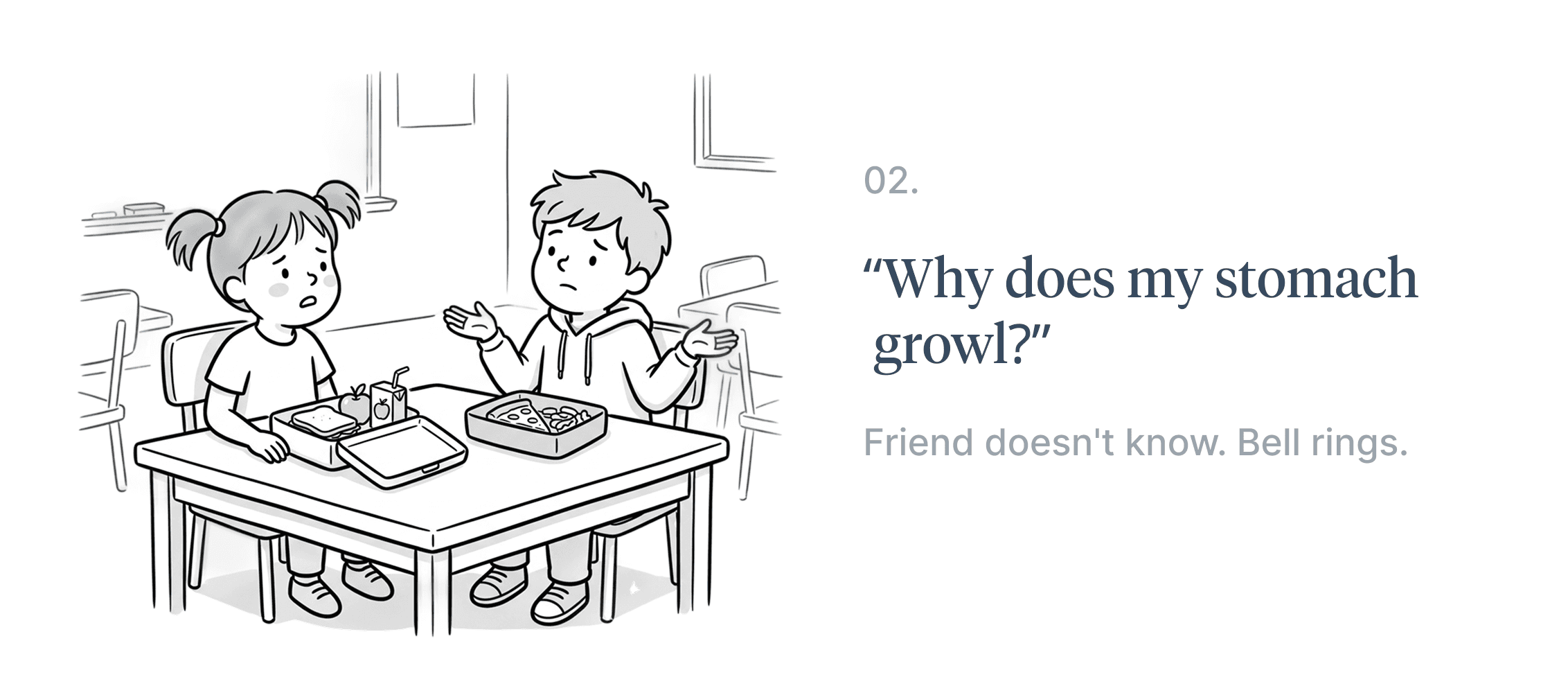
The question doesn't disappear dramatically. It just quietly stops existing.

THE PRODUCT

Whylo catches the question before it disappears.

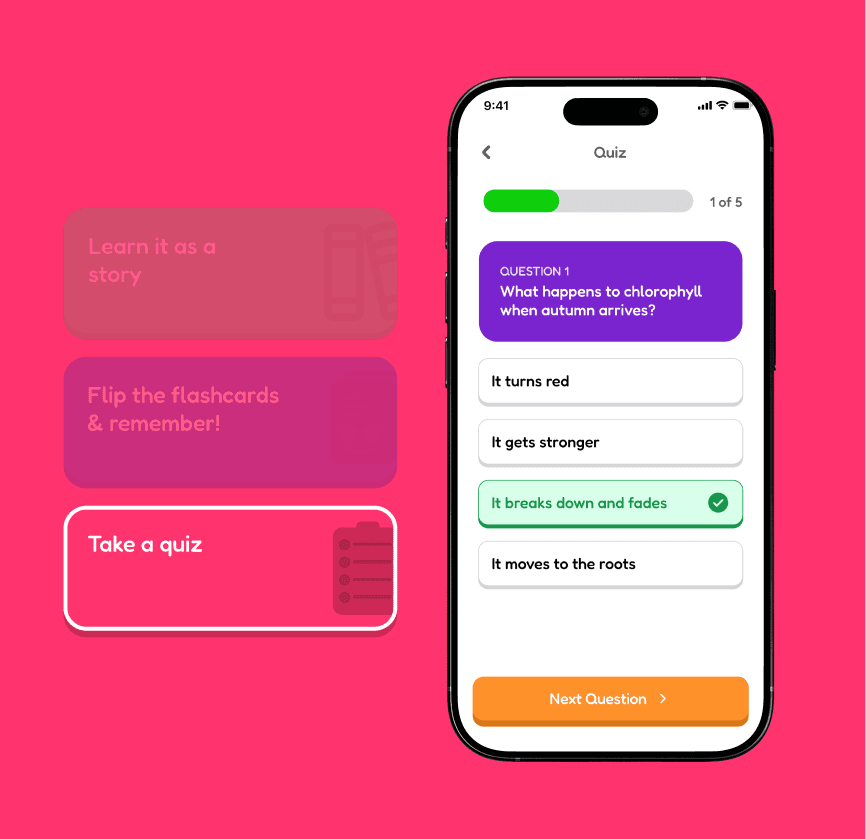
Whylo is an AI-powered learning app for kids aged 7 to 13. Ask anything: by voice, text, or photo. What happens next is better shown than explained.

THE LANDSCAPE

Learning apps exist. None of them start with a question.

They teach well. But they're all built around content, not curiosity.
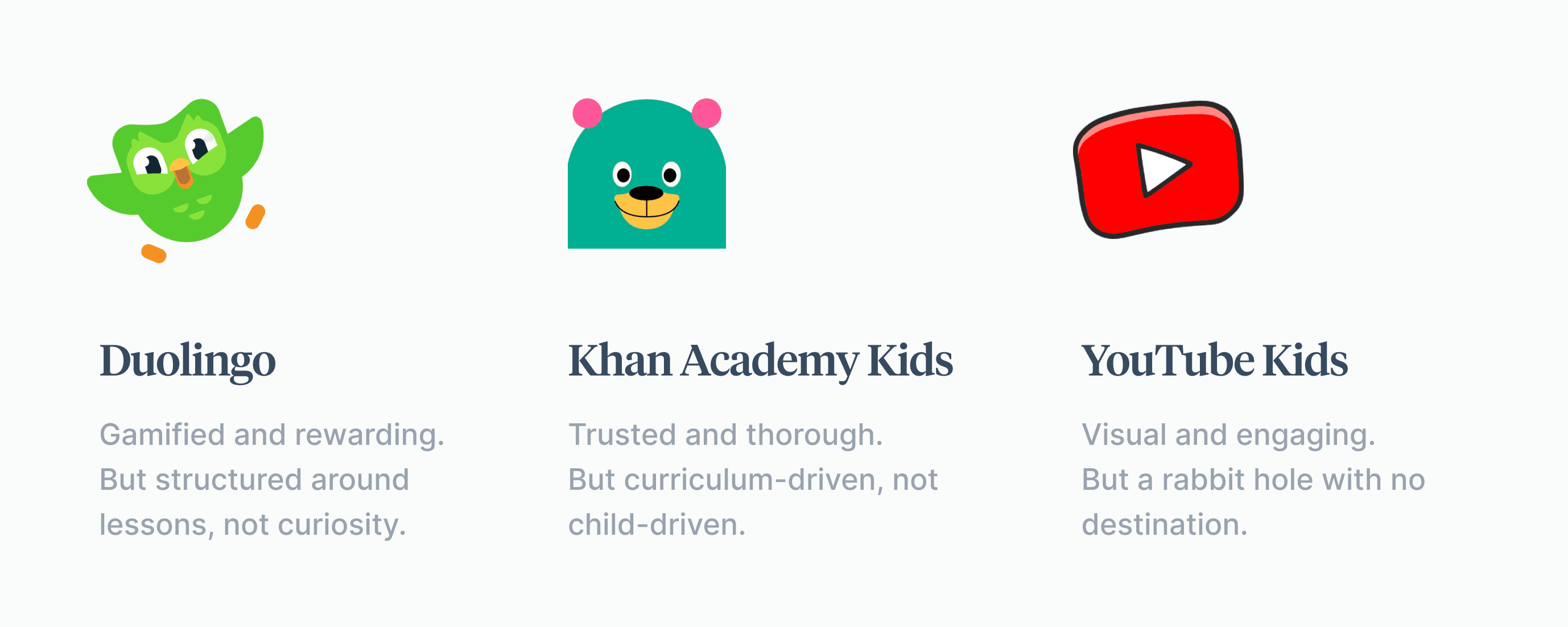
None of these are built for the moment a kid wonders something.

THE PROCESS

How we found out.

We spent two weeks talking to kids and their parents: not about apps, but about questions. When do you ask them? What happens after?

7

Kids and parents

Ages 7 to 13, interviewed with parents for fuller context.

2

Research methods

User interviews for qualitative insights. Affinity mapping to find patterns.

2

Rounds of testing

Usability testing with 4 kids on hi-fi prototypes to validate design decisions.

WHAT WE HEARD

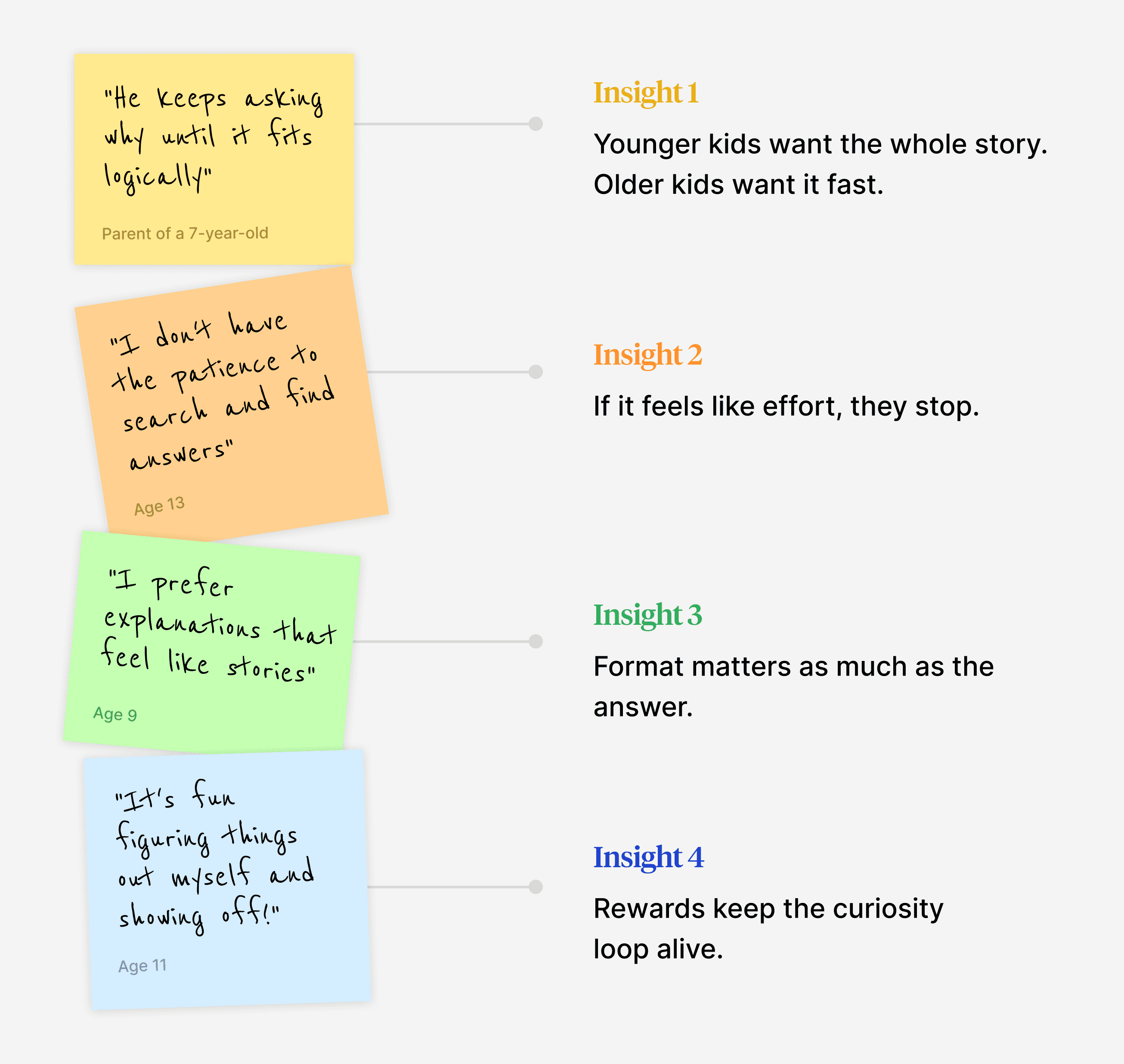
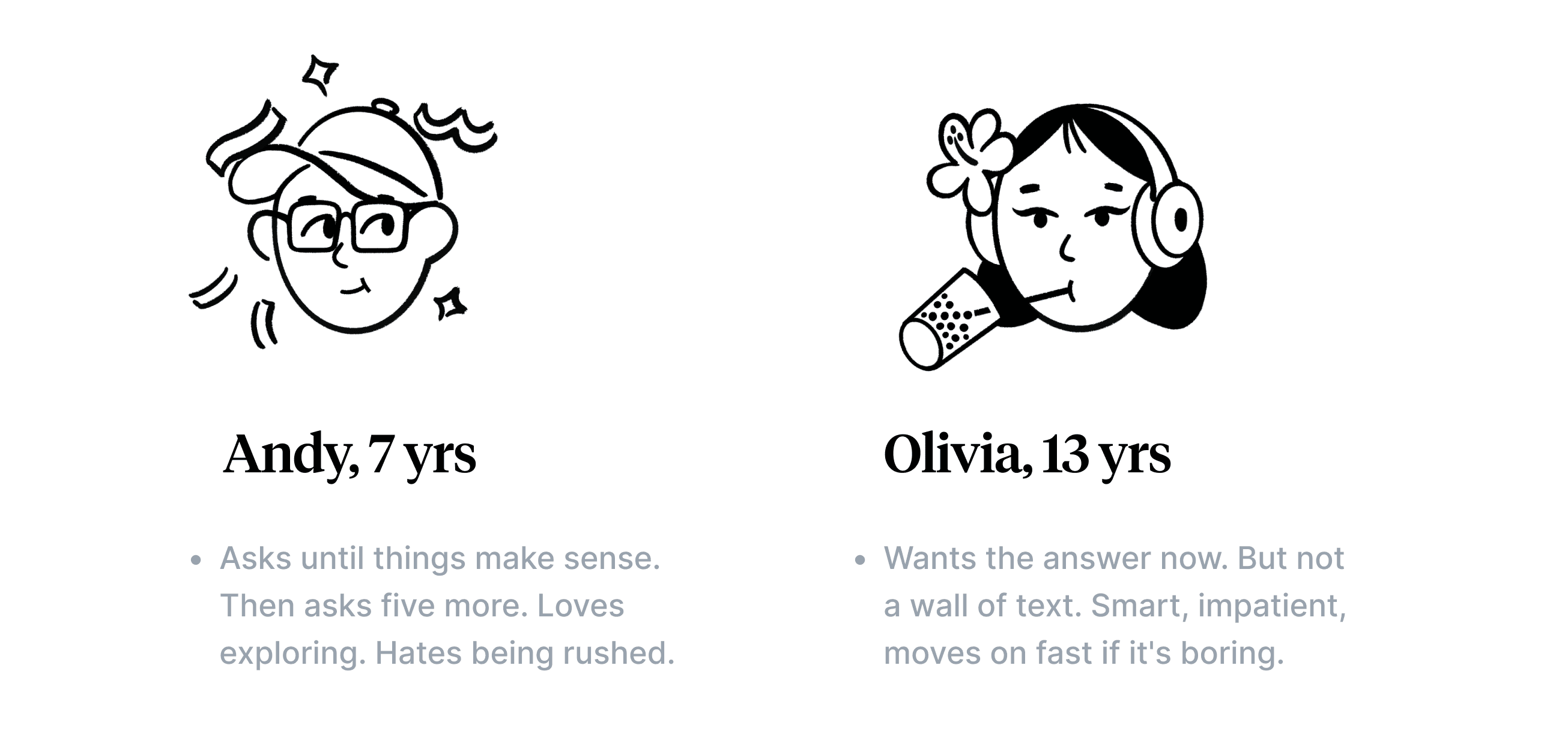
A 7-year-old and a 13-year-old want completely different things.

Four patterns kept coming up across every interview. They shaped every design decision we made.
WHO WE DESIGNED FOR

Two kids. Completely different ways of being curious.

One wants to go deep. One wants to get there fast. Designing for both meant never letting speed come at the cost of depth, or depth come at the cost of speed.
DESIGN DECISIONS

Three important decisions that shaped the product. Every design choice involved a tradeoff. Here are the three that mattered most.
DECISION 1

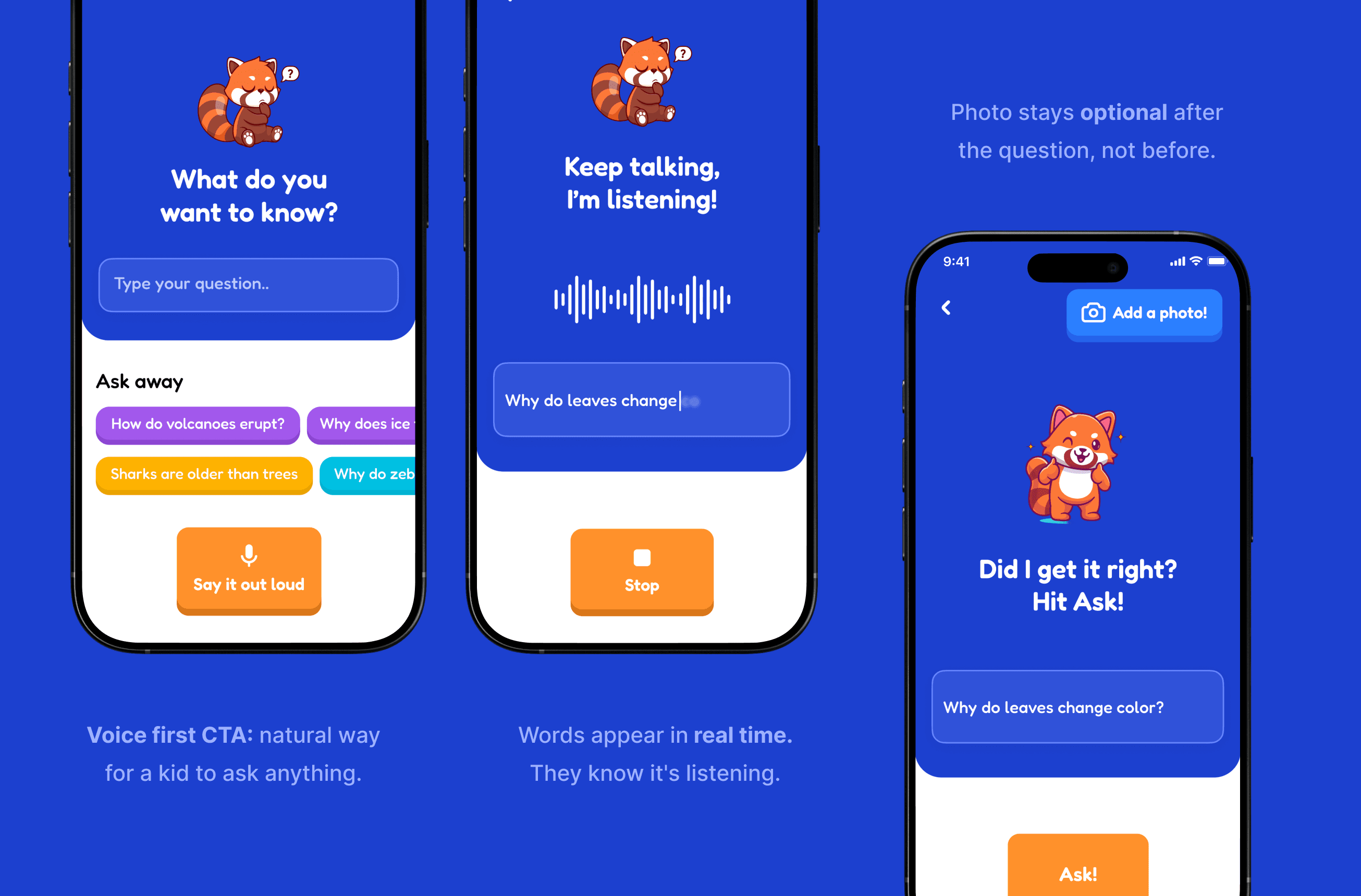
Asking a question should feel effortless. Three inputs made it overwhelming.

Kids think out loud. Three inputs at once told them to think like a search engine.

Iteration 1

Iteration 2

Final Design

We didn't reduce the options. We made one feel so natural the others didn't need to shout.

DECISION 2

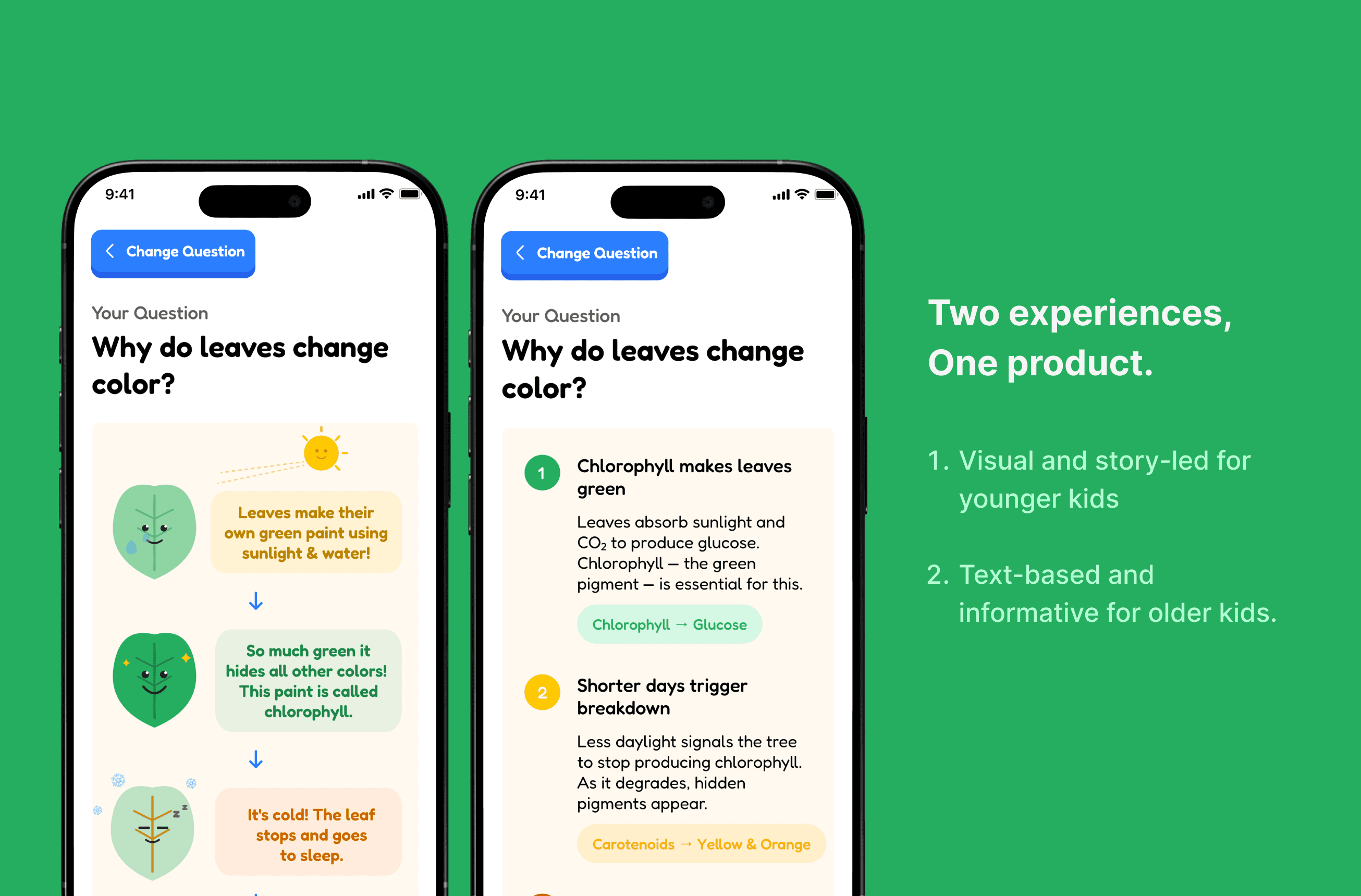
Depth vs. speed. We refused to choose.

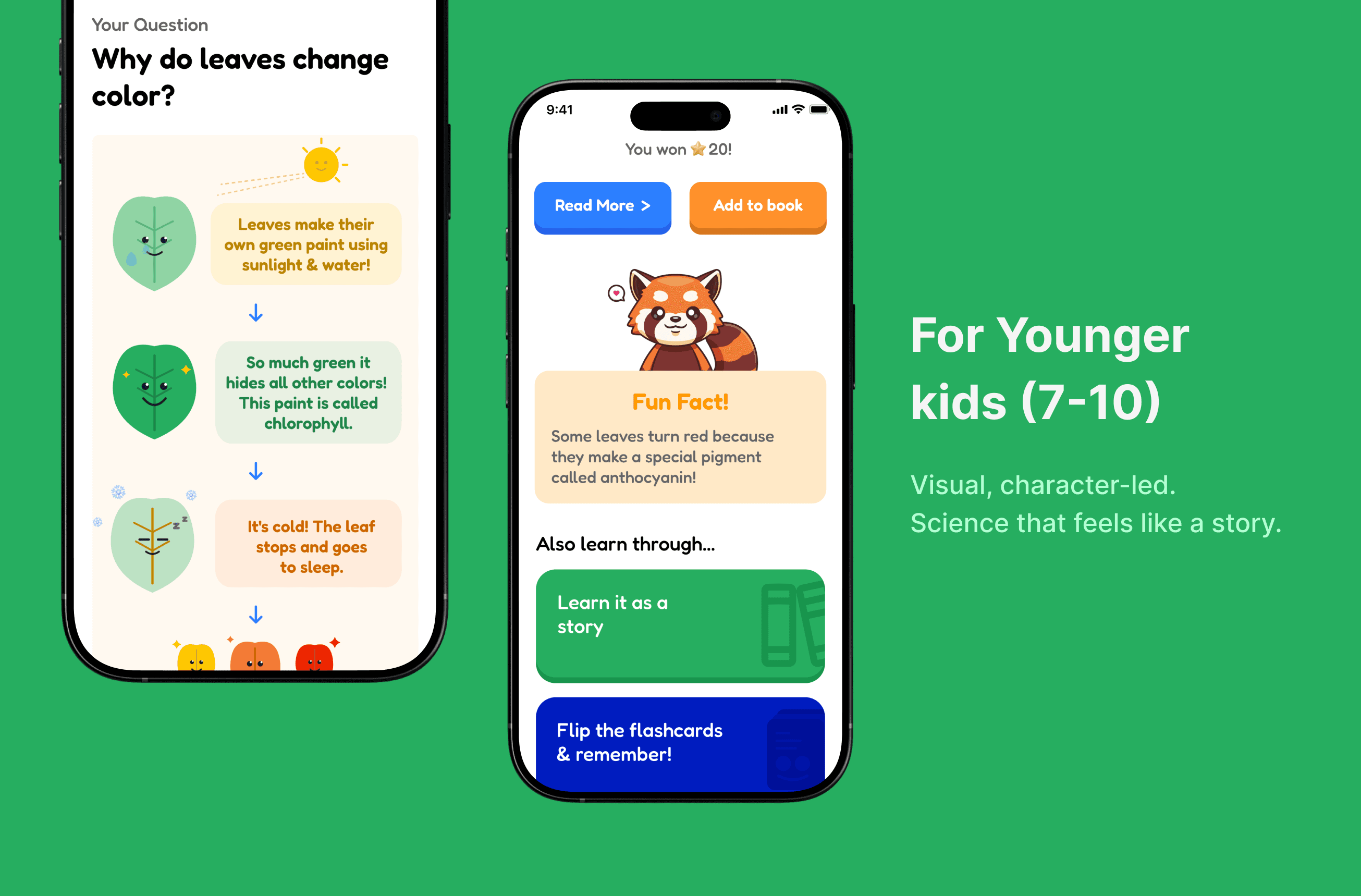
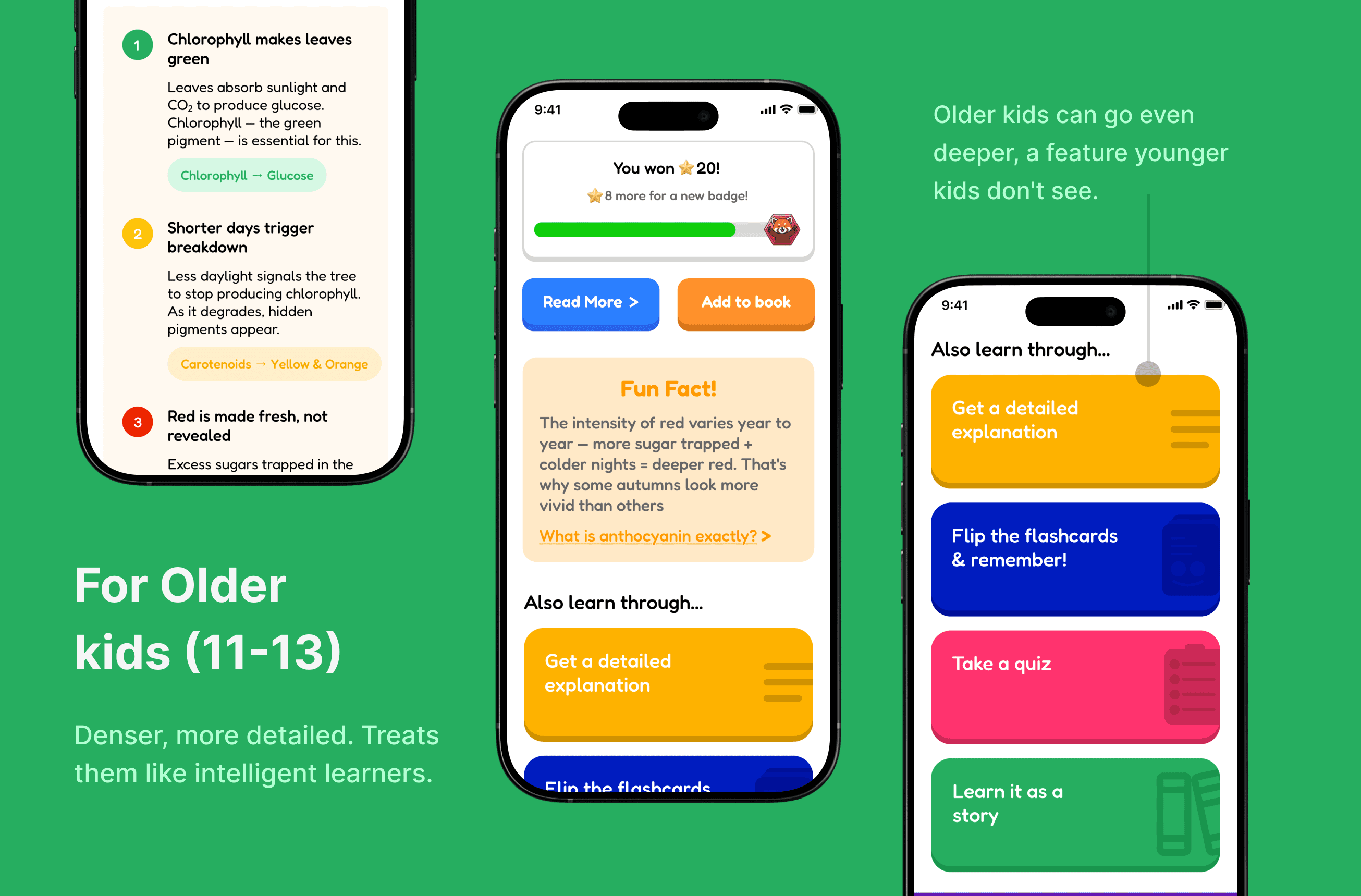
A 7-year-old and a 13-year-old ask the same question. They need completely different answers.

Iteration 1

Iteration 2

Final Design

We didn't design one answer. We designed one answer per kid.

DECISION 3

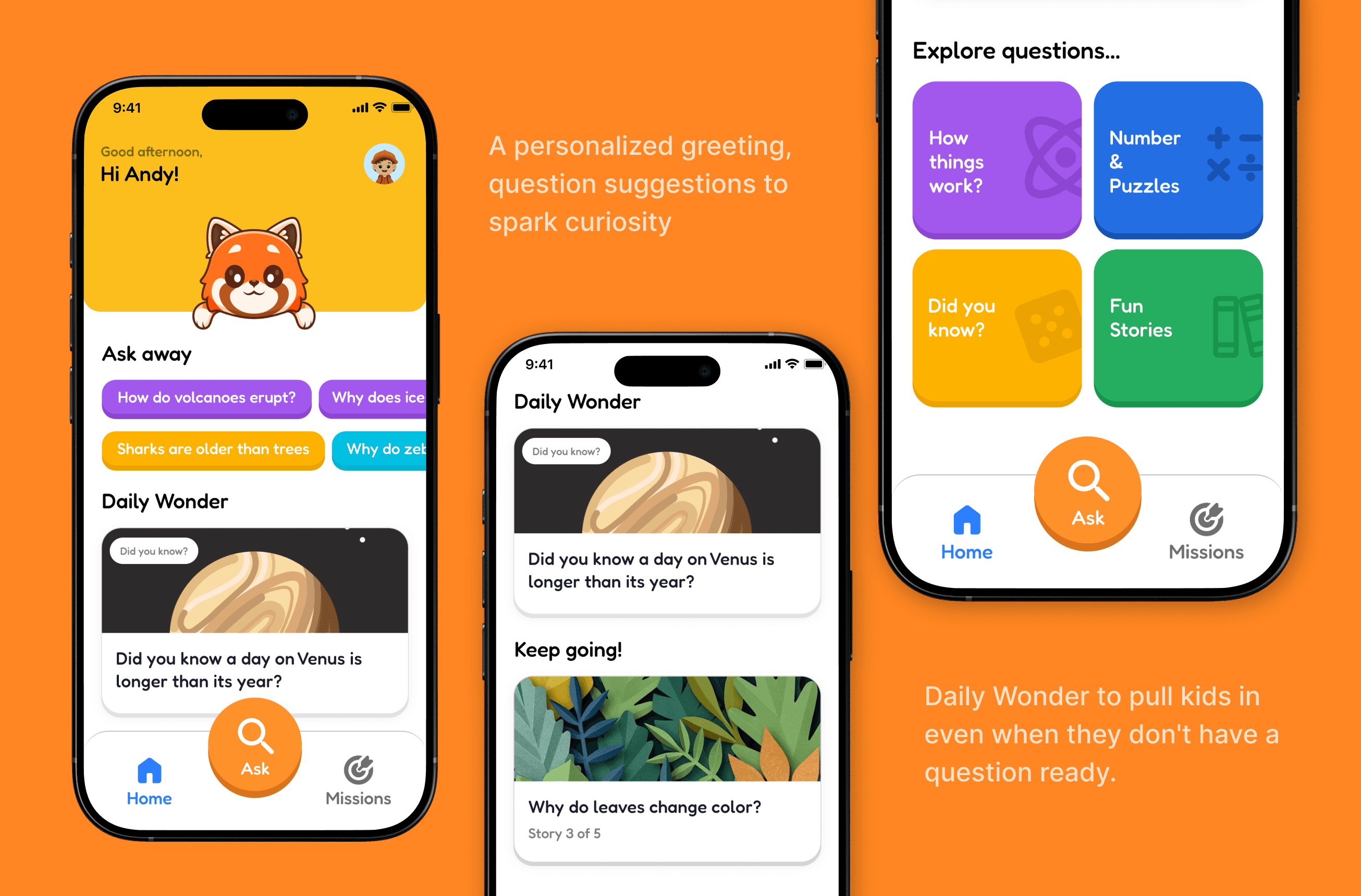
A homepage that opens with curiosity, not a curriculum.

Kids think out loud. Three inputs at once told them to think like a search engine.

Iteration 1

Iteration 2

Final Design

Not every kid arrives with a question. The homepage needed to create one.

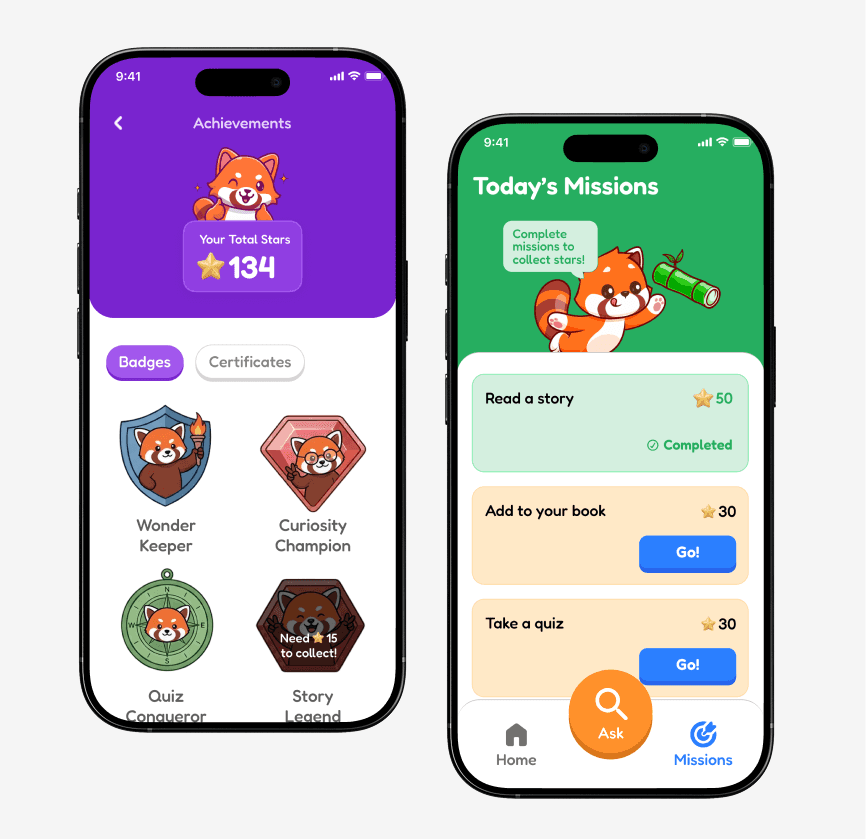
The rest of the experience.

SUCCESS METRICS

If Whylo works, the numbers will show it.

Three metrics that tell us whether curiosity is actually being served, not just sessions and clicks.


Questions asked per child per week

If this number grows week on week, the curiosity loop is working.


Day 7 retention


A child returns only if the app sparked something worth coming back for.


Learning mode adoption rate

If kids only take the quick answer and leave, the multi-mode system isn't earning its place.

REFLECTION

What Whylo taught me.

Kids are the most unforgiving design critics you'll ever work with. They won't tell you something is confusing, they'll just stop using it. Every label, every button, every piece of copy had to work for a 7-year-old without feeling childish to a 13-year-old. That tension made me a sharper designer. It forced precision I don't always apply when designing for adults.


Whylo also made me think about context in ways I hadn't before. A kid using this app isn't sitting at a desk. They're in a backseat, at lunch, right before bed. Designing for those moments, not just the screen, changed how I thought about the whole product.

Given more time, I'd want to explore the parent layer. How involved should a parent be? Do they get visibility into what their kid is curious about? That question alone could reshape Whylo in ways worth exploring.

Big thanks to Sriya and Shlok for building this with me, and to Prof. Anthony Conta for pushing us in the right direction throughout.

THANK YOU FOR READING!

Debodyuti Biswas