
ROLE
Founding Designer
TIMELINE
Jan - Aug 2025
TEAM
Solo Founding
Designer
SKILLS
Product Design
UX Research
Usability testing
MONDAY MORNING BEFORE CLINIC
Dr. Angela runs a 12-week diabetes reversal program.
She sees patients weekly through group sessions and follow-ups as part of the program, working alongside a health coach and assistant.
In total, she manages around 230 patients across multiple groups and typically has only 30–40 minutes to prepare before each session.
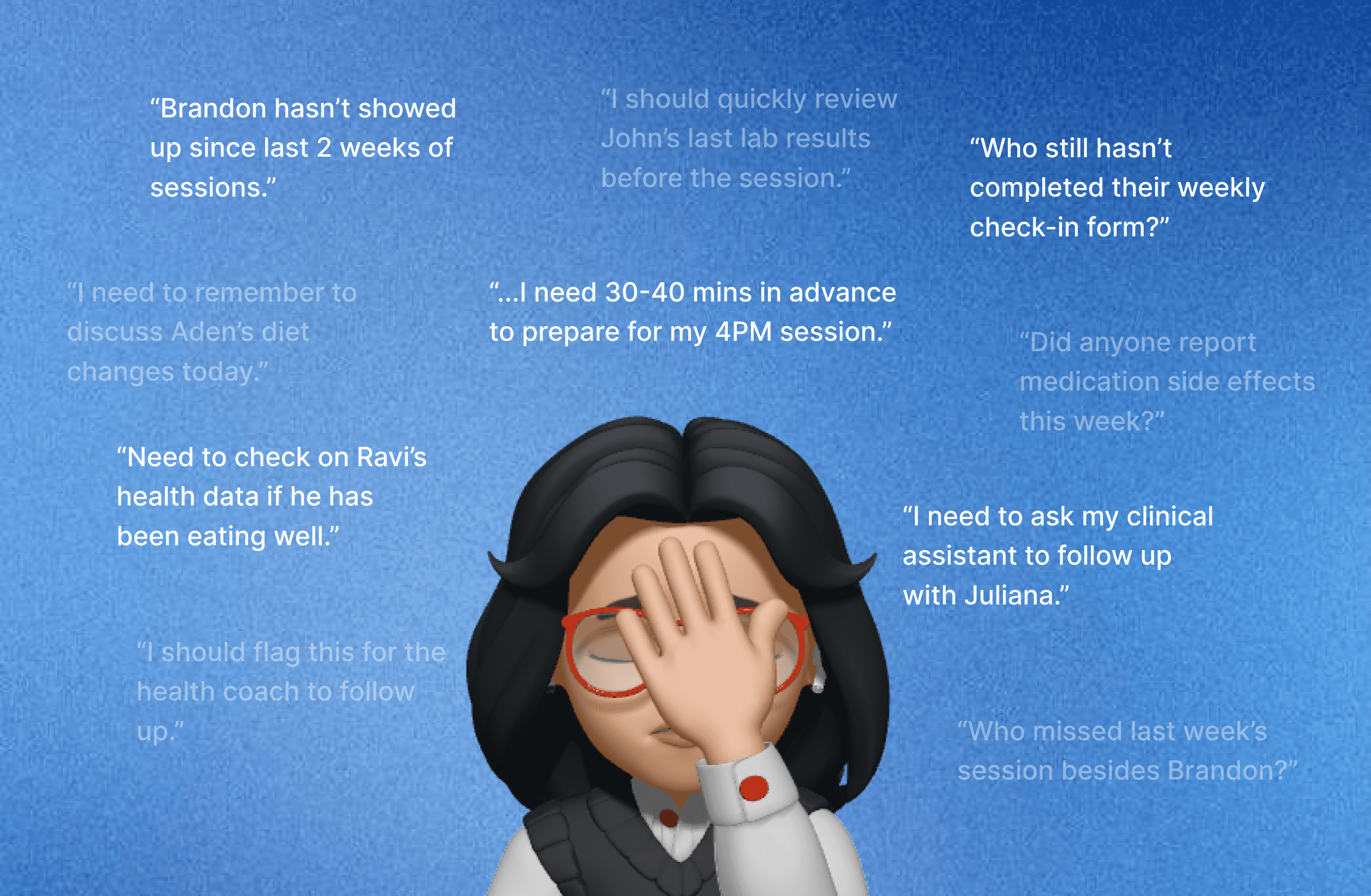
“Before the session starts, I just need a clear snapshot of what’s going on with my patients.”
This highlighted the need for a simple way to surface patient insights before each session.
Insurance Billing Notes
Billing Codes: X541, BV1245
Julien mentioned experiencing mild fatigue in the afternoons but says sleep quality has
slightly improved. No new symptoms were reported .
Blood pressure readings shared by Julien. He reports occasional knee discomfort during longer walks.
Billing Code: XXXXX
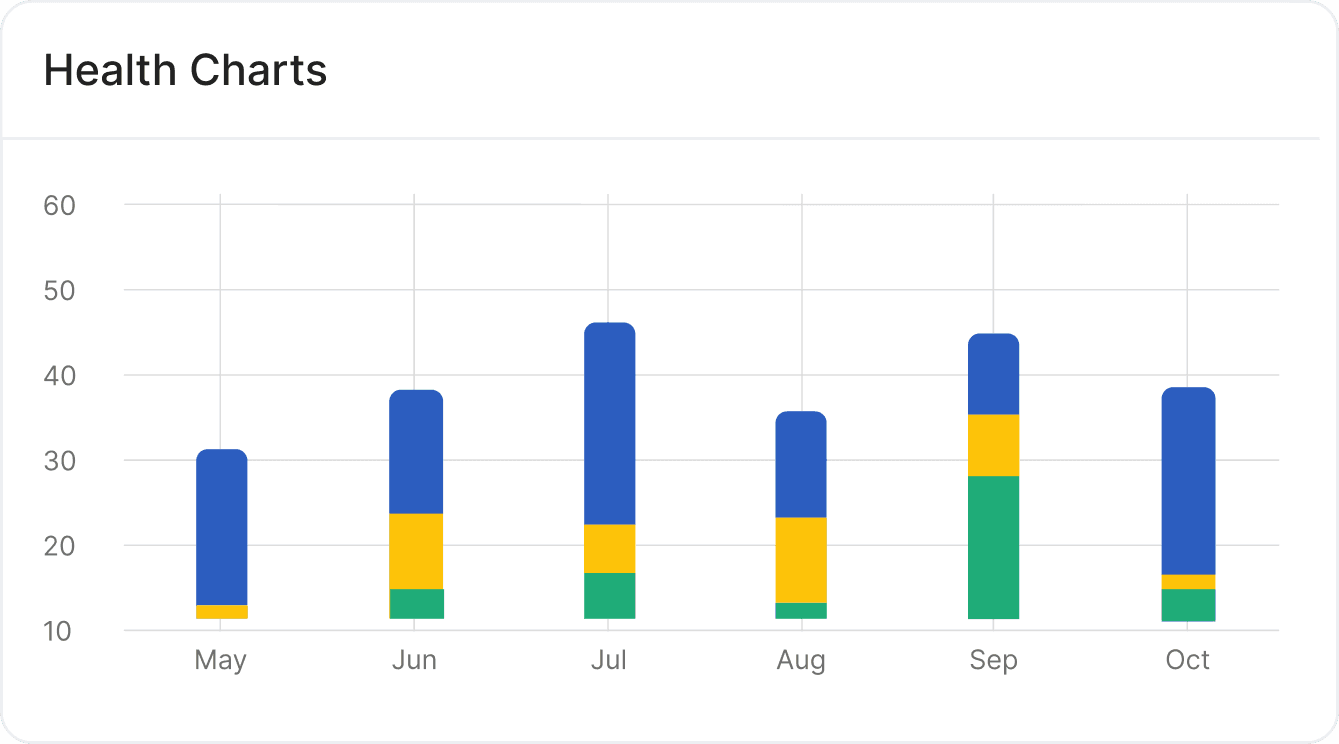
Health Data - Julien Adams
Julien Adams
Age: 54 • Type 2 Diabetes
• Julien mentioned experiencing mild fatigue in
the afternoons but says sleep quality has
slightly improved.
• No new symptoms were reported by Julien
during this appointment.
• Blood pressure readings shared by Julien…
Julien Adams
UNDERSTANDING THEIR REAL WORKFLOW
Care was continuous. Tools were episodic.
Lifestyle Medicine programs run weekly for months, but most clinical software is built for one-time visits.
To run a single session, doctors had to jump across multiple systems and mentally reconstruct patient progress every week.
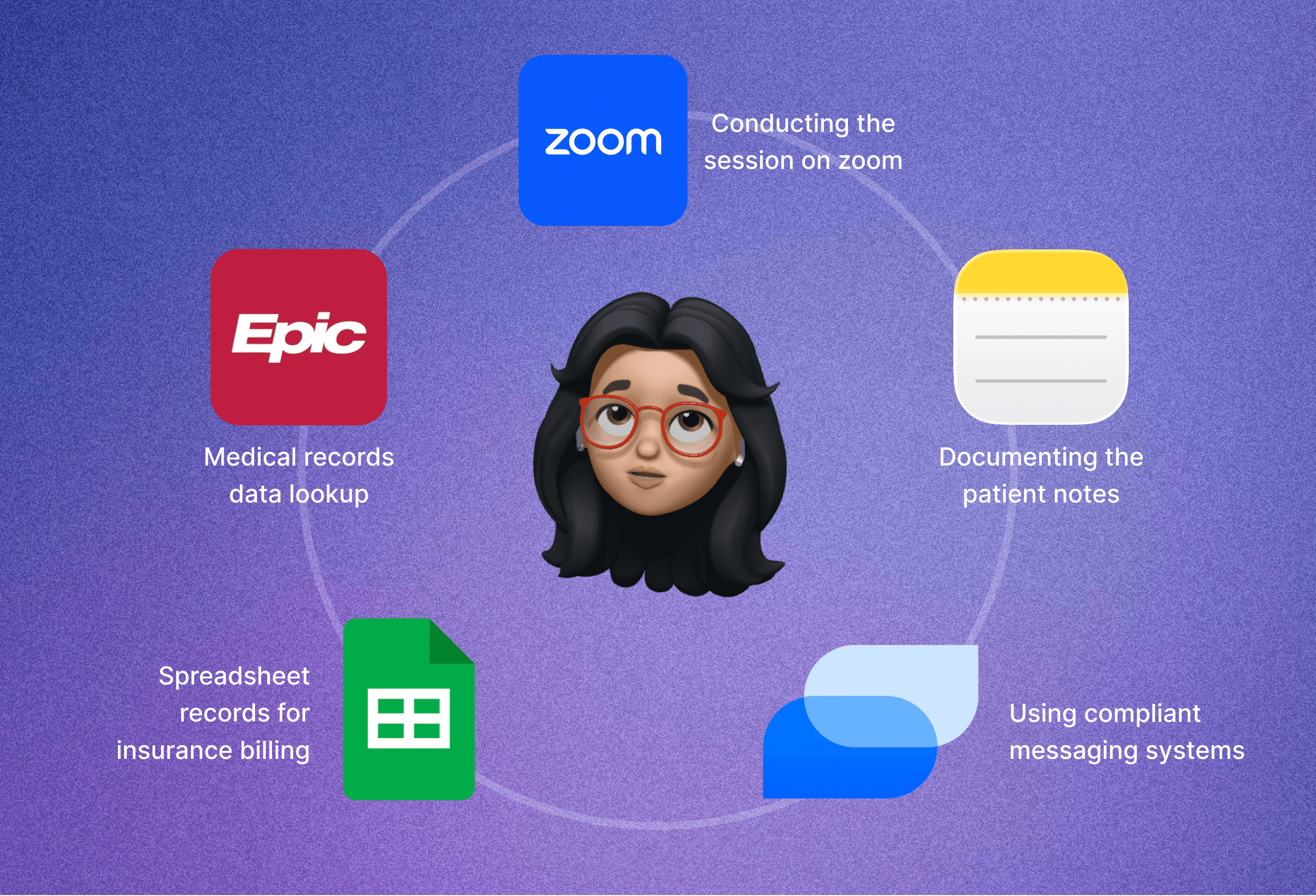
They weren’t running a program. They were operating multiple softwares.
FINDING THE PATTERNS
How we studied real clinical behavior
To understand how lifestyle medicine programs actually operate, we studied clinicians running shared medical appointments in real settings.
Instead of relying only on interviews, we focused on observing the entire workflow under real time pressure.
Contextual inquiry
We conducted contextual inquiry with 14 lifestyle medicine clinicians as a pilot who were running these long-term programs.
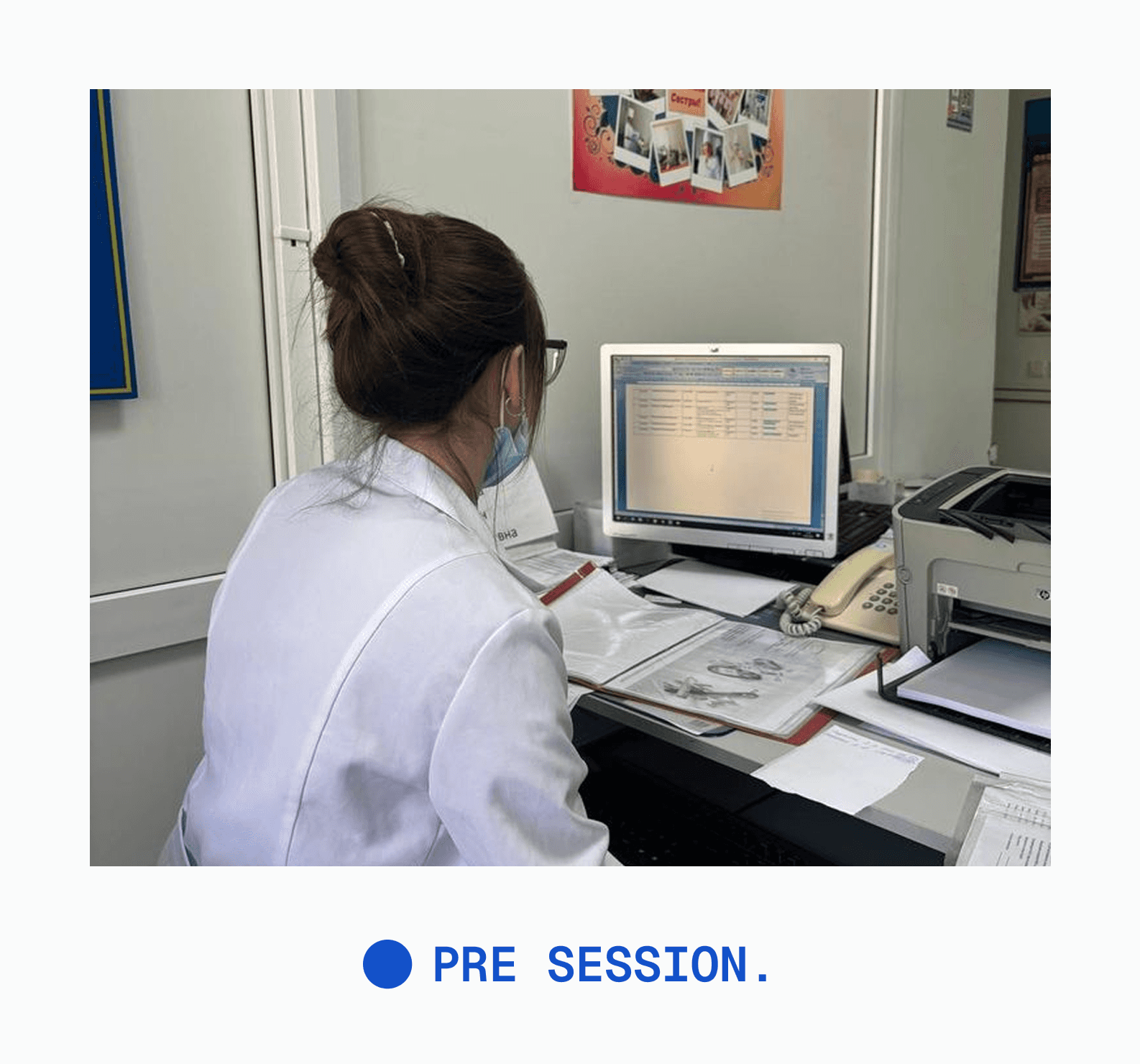
Pre-session
We shadowed clinicians while they prepared for sessions, reviewing patient data and reconstructing progress across weeks.
During session
We observed live shared medical appointments, watching how clinicians balanced conversation, coaching, and documentation in real time.
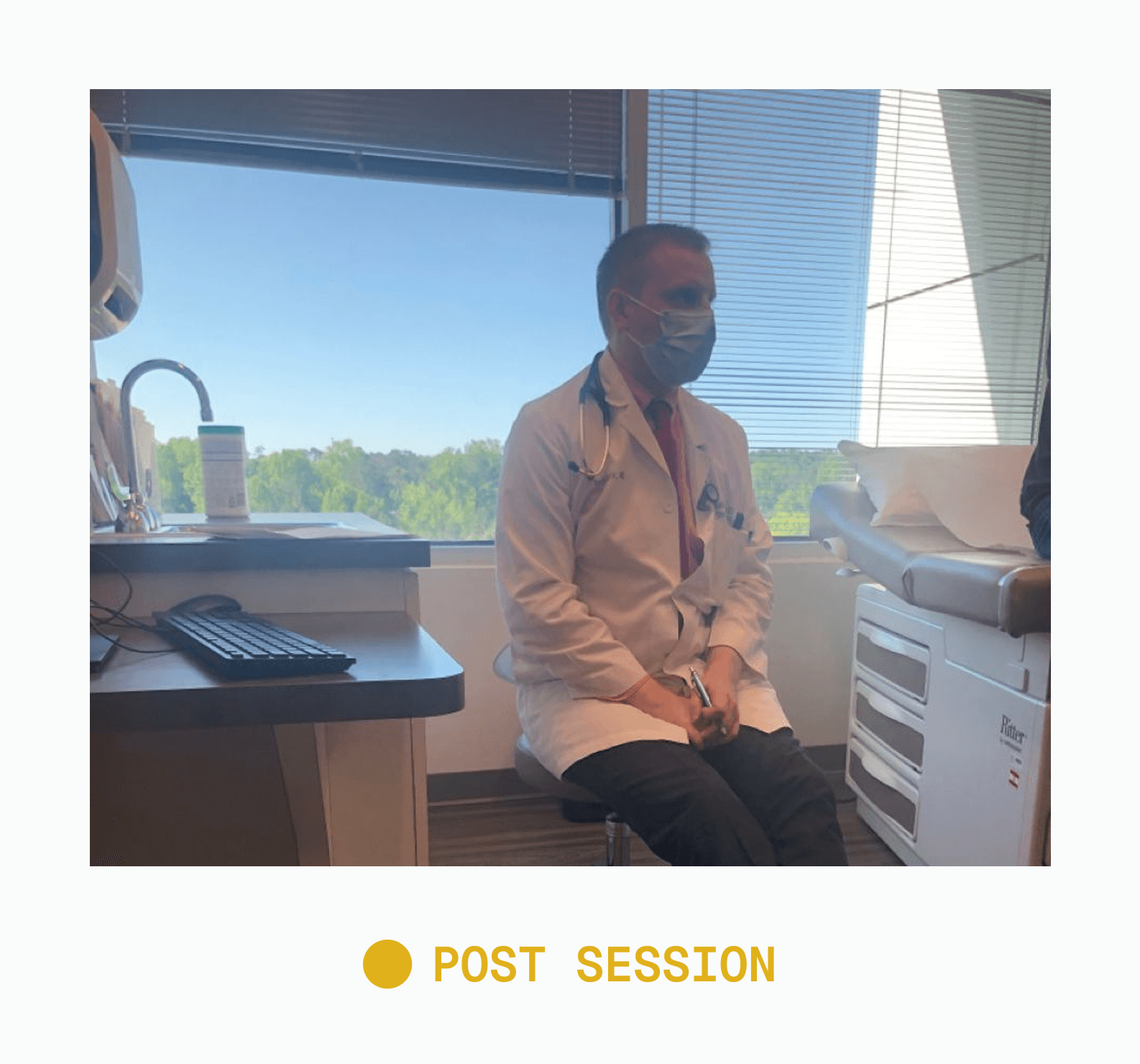
Post-session
We followed the workflow after sessions, including documentation, billing, and patient follow-ups.
SYNTHESIZING INSIGHTS
Key patterns across clinical workflows
Observing clinicians across preparation, sessions, and follow-ups revealed recurring friction points. These insights helped us understand why existing clinical tools struggled to support long-running lifestyle medicine programs.
Doctors don’t lack data, they lack organized memory of the patient.
Much of the work exists only to recreate care for records and billing.
Preparation and follow-up take more effort than the appointment.
Patients dropped out after a few weeks because follow-ups were inconsistent and hard to manage.
The system was designed around visits, but lifestyle medicine works as a long-running program.
DEFINING SUCCESS METRICS
What we set out to improve
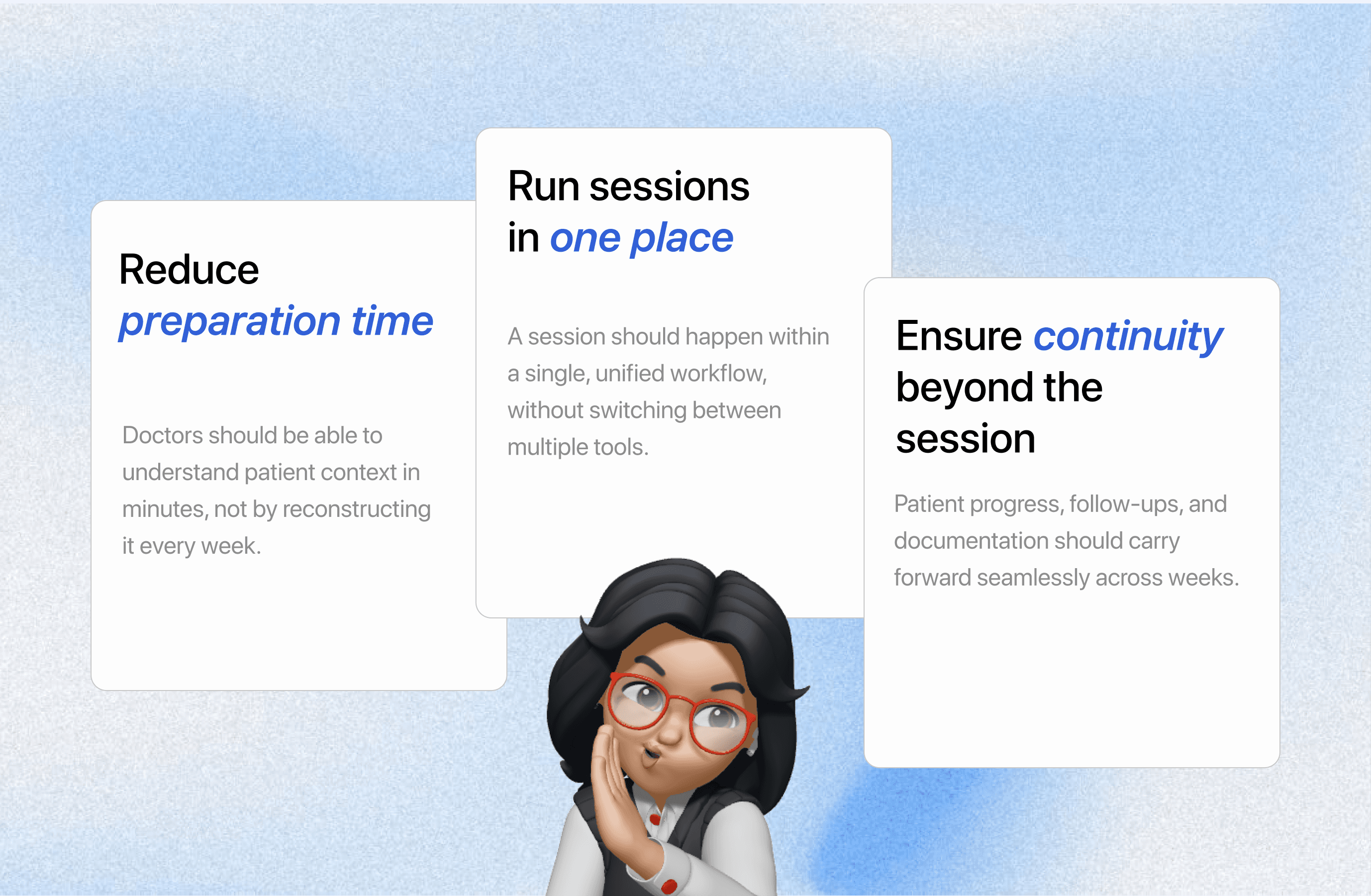
We translated our insights into three core goals that would guide every design decision.
OH SNAP!
This case study is a part of NDA
As the Founding Designer, I led the end-to-end design of Proactively’s core platform, shaping provider workflows, patient experiences, and the overall product direction from 0→1.
THANK YOU FOR READING!
Debodyuti Biswas